Why I Shoot Weddings Without Flash — Even in a Dark Reception Hall
Flash is the easiest tool in photography. One button, instant light, no shadows, everything visible. But I almost never use it at weddings — even when the reception hall is dim, the dance floor is dark, and the only light comes from string lights, candles, or DJ strobes.
Here’s why I choose to shoot without flash — and why the photos end up warmer, more cinematic, more emotional, and more you.
1. Flash Kills the Mood — Natural Light Preserves It
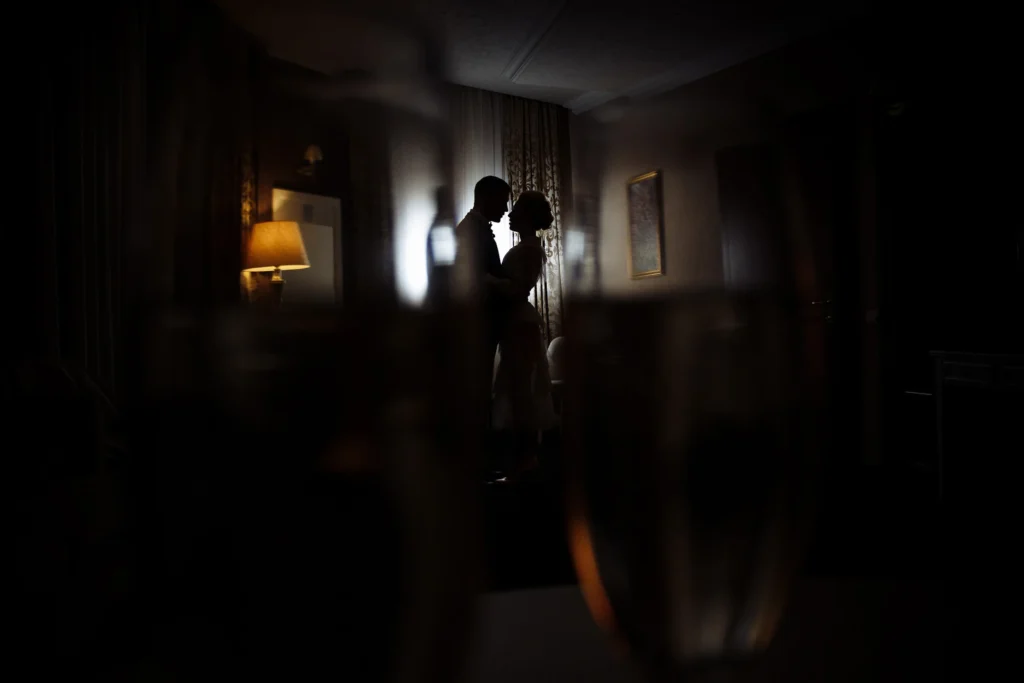
Every venue has its own atmosphere. A dark hall with fairy lights feels intimate and magical. Candles on tables create soft, golden warmth. A DJ’s colored lights add drama and energy.
Flash destroys all of that in one pop.
- It flattens the depth — everything becomes equally bright, shadows disappear
- It turns warm candlelight into cold white
- It makes skin look shiny and unnatural
- It kills the romance of low light
When I shoot without flash, I keep the mood the venue already created. The photos feel like they belong to that exact night — not like they were taken in a studio.
2. I Work with What the Venue Gives Me — Not Against It
Dark doesn’t mean “bad light.” It means different light — and different light creates different emotion.
- Warm string lights + low ambient = cozy, intimate portraits
- Blue/purple DJ lights + motion blur = energetic, alive dance floor shots
- Candlelight + golden hour spill from windows = soft, romantic close-ups
- Single spotlight on the first dance = dramatic, cinematic moment
Flash would override all of this. Instead, I increase ISO, open the aperture (f/1.4–f/2.0), use fast lenses (50mm f/1.4, 85mm f/1.4), and shoot at 1/125–1/200 s to freeze motion while letting in enough ambient light. The result: photos that feel like the real atmosphere — not like a flash-lit snapshot.
 3. Low Light Forces Me to Capture Real Emotion — Not Posed Smiles
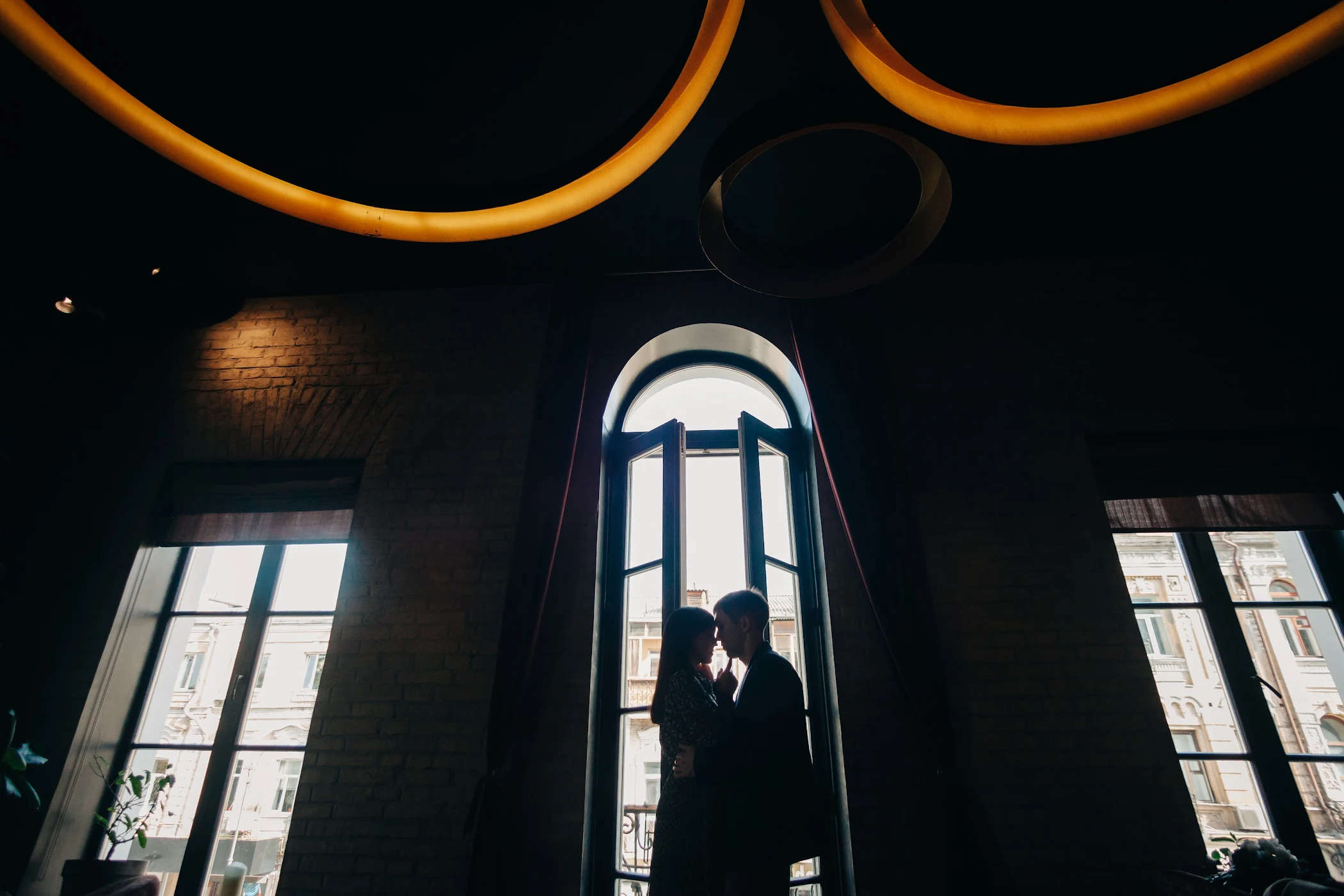 3. Low Light Forces Me to Capture Real Emotion — Not Posed Smiles
When it’s dark, people behave differently.
- They lean closer to be heard
- They hold each other tighter to feel warm
- They laugh louder and dance freer
- They whisper secrets in corners
- They don’t notice the camera as much
No flash means no harsh light in their faces — so they don’t squint, tense up, or “perform” for the camera. They just live the moment. And that’s when the most honest, emotional, beautiful frames happen.
4. Modern Cameras Make Flash Almost Unnecessary
In 2026, cameras (especially full-frame mirrorless) handle high ISO incredibly well — clean images at ISO 6400–12800 are normal.
- Noise is minimal and looks organic (like film grain)
- Colors stay true to the venue’s lighting
- Dynamic range captures both highlights (candles, lights) and shadows (faces, details)
With fast primes (f/1.4 or f/1.2) and good technique, I can shoot a dark reception at ISO 8000–10000 and still deliver clean, warm, cinematic files.
Flash would be easier — but it would cost the atmosphere.
5. The Result: Photos That Feel Like Memories, Not Snapshots
Couples often tell me after the gallery delivery: “The reception photos feel like how the night actually felt.” “I can almost hear the music and smell the candles again.” “We look like we were really there — not posing in a spotlight.”
That’s the goal. Not bright, flat, “perfectly lit” photos. But images that transport you back to the exact feeling of the night — dark corners, warm lights, laughter in the shadows, love glowing in low light.
One Final Thought
Flash is a tool. But mood is the story. When I choose to shoot without flash — even in a dark hall — I’m choosing the story over the shortcut. I’m choosing to let the venue’s light, the couple’s energy, the night’s atmosphere write the photographs.
And those are the images that last — because they don’t just show what happened. They let you feel it again, exactly as it was.
If you want your wedding photographed with respect for the real light, the real mood, the real emotion — without artificial flash flattening the night — I’d be honored to be your photographer. Reach out. We’ll capture your day in its true, beautiful darkness.